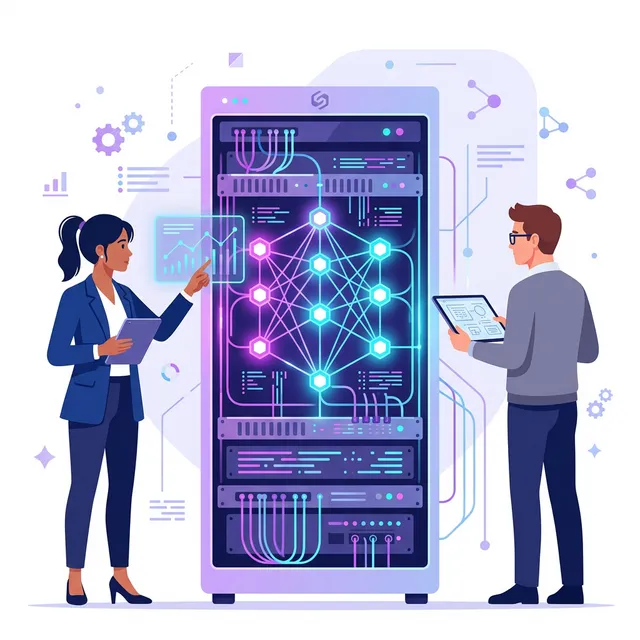
Inside the Ringlyn AI Platform: The Architecture Powering Next-Generation Enterprise Voice AI
A deep technical look at the platform capabilities that make Ringlyn AI the enterprise choice for large-scale conversational AI.
Utkarsh Mohan•Feb 17, 2026
An authoritative look at the deployment frameworks, operational models, and measurable outcomes from Ringlyn AI's largest enterprise customers — the organizations processing millions of AI-handled calls across global operations.
Divyesh Savaliya
Published: Feb 20, 2026
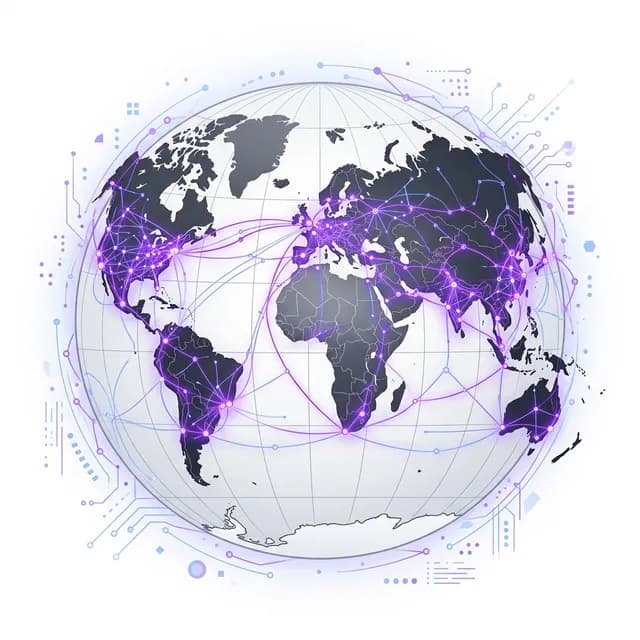
There is a significant gap between deploying an AI call assistant for a few hundred calls per week and operating an enterprise AI calling infrastructure that handles millions of conversations per month across multiple time zones, languages, regulatory jurisdictions, and business units. Ringlyn AI's enterprise customer base provides direct visibility into what it actually takes to succeed at this scale — the architectural requirements, operational disciplines, and organizational capabilities that separate enterprise AI calling leaders from the organizations still struggling with their first pilot.
This analysis draws on anonymized data and operational frameworks from Ringlyn AI's largest enterprise deployments. It is designed for technology executives, enterprise architects, and operations leaders who are planning or managing large-scale AI calling programs.
Enterprise AI calling at scale is qualitatively different from small or mid-market deployment in several dimensions that are easy to underestimate during planning:
Ringlyn AI's infrastructure is engineered for elastic, fault-tolerant operation at enterprise scale. The key architectural decisions that enable reliable performance at 10,000+ concurrent calls:
Financial services organizations deploying Ringlyn AI at scale operate under the most demanding regulatory requirements in any industry. Key deployment characteristics for this sector:
Primary use cases: Collections outreach, account management follow-up, fraud alert notifications, loan application status, insurance renewal campaigns, and inbound account inquiry handling.
Compliance architecture: TCPA-compliant dialing controls including do-not-call registry integration, calling hour enforcement by state, consent management with audit trail, mandatory disclosure statements at call initiation, and call recording with secure storage and configurable retention policies aligned with regulatory requirements.
Outcomes observed: Collections contact rates increased 45% through consistent multi-touch outreach; operational cost per account contacted reduced by 73% compared to human agent model; regulatory audit trail completeness improved from 82% to 100%.
Healthcare organizations deploy Ringlyn AI for patient communication workflows that improve outcomes while reducing administrative burden on clinical staff.
Primary use cases: Appointment reminders and confirmations, post-discharge follow-up, medication adherence outreach, preventive care reminders, insurance verification intake, and after-hours nurse triage support.
Compliance architecture: HIPAA BAA in place; PHI handling controls; patient opt-out management; consent documentation; integration with EMR systems for patient context retrieval.
Outcomes observed: Appointment no-show rates reduced by 34% through automated reminder and confirmation sequences; post-discharge follow-up contact rates increased from 61% to 94%; clinical staff administrative time reduced by approximately 15 hours per week per department.
Large retail and e-commerce organizations deploy Ringlyn AI to automate the revenue operations workflows that previously required significant manual effort.
Primary use cases: Order confirmation and shipping update outreach, abandoned cart recovery calls, loyalty program engagement, seasonal campaign outreach, inbound customer service, and post-purchase feedback collection.
Outcomes observed: Abandoned cart recovery rate improved by 28% through AI-powered follow-up calling within 2 hours of abandonment; customer service call resolution rate improved from 67% to 79% for Tier-1 inquiries; campaign outreach cost reduced by 81% vs. human agent equivalent.
Analysis of Ringlyn AI's most successful enterprise deployments reveals consistent patterns that distinguish high-performing programs from those that struggle to scale:
Enterprise-scale deployment surfaces failure modes and organizational challenges that smaller deployments mask. The lessons below are drawn from real program challenges across Ringlyn AI's enterprise customer base:
Ringlyn AI's enterprise team will co-design your scale architecture and implementation plan
Ringlyn AI's elastic infrastructure scales to support tens of thousands of concurrent calls across distributed regions. Enterprise customers with predictable peak volume requirements can provision reserved capacity to guarantee availability during campaign launches and seasonal spikes. Contact our enterprise team to discuss capacity planning for your specific volume requirements.
Ringlyn AI's compliance framework supports jurisdiction-specific configuration: different disclosure requirements, calling hour restrictions, and consent mechanisms can be applied per phone number, per campaign, or per business unit. The platform maintains separate compliance audit trails by jurisdiction and supports data residency requirements for EU, US, and APAC deployments.
Yes. Ringlyn AI supports integration with on-premise and cloud telephony infrastructure via SIP trunking, PSTN connectivity, and API-based integration with major telephony platforms. Legacy contact center platforms from Avaya, Cisco, and Genesys can be connected through established integration pathways. Our enterprise implementation team will assess your specific telephony environment during the scoping phase.
Expansion follows a structured program with four phases: Validate (pilot results analysis and optimization), Expand (additional use cases and business units), Scale (full production rollout), and Optimize (continuous improvement and new use case identification). Ringlyn AI's enterprise success team provides dedicated program management support across all phases, including executive stakeholder management, technical implementation oversight, and performance governance.
A deep technical look at the platform capabilities that make Ringlyn AI the enterprise choice for large-scale conversational AI.
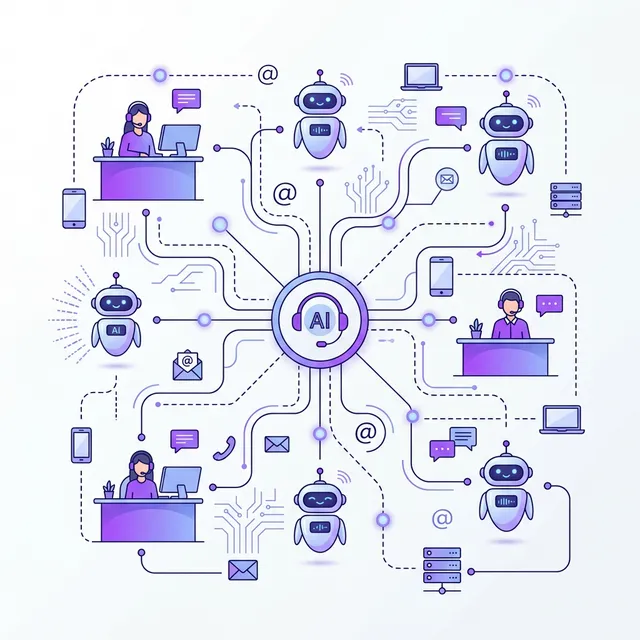
The definitive operational guide for enterprise CX leaders deploying conversational AI at scale.
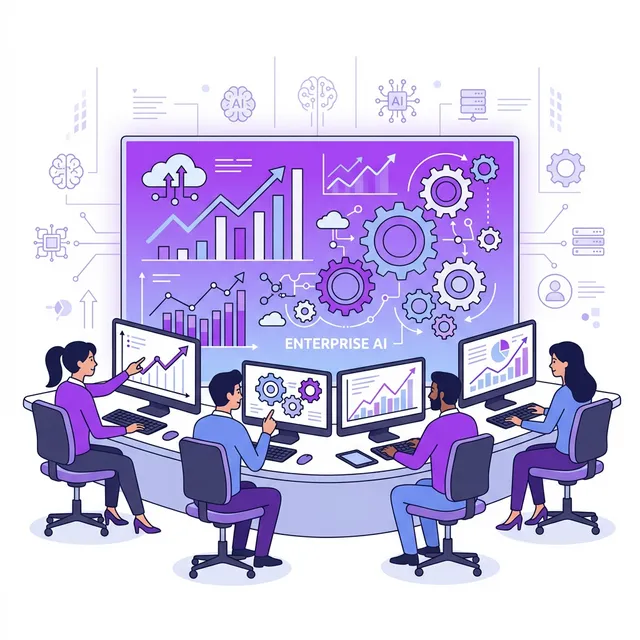
The complete executive guide to deploying AI call automation as a strategic lever for support scalability and cost transformation.