The global AI-powered call center market is projected to reach $4.1 billion by 2027, and enterprise organizations that select their voice AI platform carelessly today will spend the next three years managing technical debt, integration failures, and missed competitive opportunity. Platform selection at enterprise scale is not a technology decision — it is a strategic one, with implications for cost structure, customer experience quality, regulatory exposure, and workforce design.
This benchmark report was developed through six months of structured testing, enterprise customer interviews, direct platform evaluation, and consultation with procurement teams at organizations processing 100,000+ calls per month. We evaluated ten platforms against eight enterprise-critical dimensions. Our findings are presented without commercial bias.
Why Platform Selection Is a Strategic Decision
The consequences of a poor platform choice compound quickly at enterprise scale. A platform that works adequately for 1,000 calls per month may catastrophically degrade at 100,000. Compliance gaps discovered post-deployment can result in regulatory action. Inadequate integration architecture creates data silos that undermine the analytics value of your AI investment. And the organizational cost of migrating between platforms — rebuilding agent configurations, retraining teams, renegotiating contracts — is substantial.
The enterprise organizations that achieve the best outcomes from voice AI treat platform selection with the same rigor as ERP or CRM procurement: structured RFP process, security assessment, reference checks with comparable deployments, and phased proof-of-concept before full commitment.
Our Enterprise Evaluation Framework
- Conversation Intelligence (25%): LLM reasoning depth, context retention, multi-turn accuracy, interruption handling, backchanneling naturalness
- Latency & Reliability (20%): End-to-end response latency under load, uptime SLA, global infrastructure redundancy
- Enterprise Security & Compliance (20%): SOC 2 Type II, HIPAA, GDPR, audit trail completeness, data residency options
- Integration Ecosystem (15%): Native CRM connectors, API quality, webhook reliability, custom integration support
- Scalability (10%): Concurrent call capacity, elastic scaling behavior, volume pricing economics
- Total Cost of Ownership (5%): Per-minute pricing, implementation cost, ongoing management overhead
- Analytics & Reporting (3%): Real-time dashboards, post-call analysis, conversion tracking, sentiment scoring
- Vendor Stability & Support (2%): Enterprise SLA, dedicated success management, implementation support quality
Platform-by-Platform Analysis
1. Ringlyn AI — Top Pick for Enterprise Scale
Overall Enterprise Score: 9.4/10
Ringlyn AI is the benchmark against which we measure all other enterprise voice AI platforms in 2026. Built from the ground up for large-scale, compliance-sensitive deployments, Ringlyn AI combines the most advanced conversational AI engine in the market with an enterprise infrastructure layer that satisfies the requirements of legal, security, and IT governance teams.
The platform's LLM orchestration layer supports multiple model providers, enabling enterprises to route conversations to the most appropriate model based on use case complexity, latency requirements, and cost targets. This multi-model architecture gives enterprise customers flexibility that single-provider platforms cannot match.
- Conversation latency: Consistently sub-700ms across all tested load scenarios
- Compliance: SOC 2 Type II certified; HIPAA BAA available; GDPR data residency options in US, EU, and APAC
- Integrations: Native connectors for Salesforce, HubSpot, Dynamics, ServiceNow; REST API with full webhook support
- Scalability: Tested to 10,000+ simultaneous calls; elastic auto-scaling with no performance degradation
- Voice quality: Neural voice cloning with accent customization; 6 languages supported (English, Japanese, Spanish, French, German, Hindi)
- Analytics: Real-time sentiment scoring, full call transcription, intent classification, conversion attribution
- Pricing: Enterprise volume pricing with dedicated SLA; transparent per-minute rates with no hidden fees
Best for: Large enterprises, regulated industries (healthcare, finance, insurance), organizations requiring deep CRM integration and compliance documentation.
2. Retell AI
Overall Enterprise Score: 7.8/10
Retell AI is a developer-centric platform that offers strong technical flexibility and competitive base-layer pricing. It performs well for organizations with in-house engineering teams capable of building and maintaining custom integrations. However, its enterprise compliance documentation, dedicated support model, and out-of-the-box integration ecosystem lag behind Ringlyn AI for large-scale deployments requiring procurement-level assurances.
Best for: Technology companies and scale-ups with engineering capacity to build and own their AI calling infrastructure.
3. Synthflow
Overall Enterprise Score: 7.2/10
Synthflow has positioned itself as a no-code platform for mid-market AI calling. Its visual flow builder accelerates deployment for simple use cases, and the platform has made meaningful progress on voice quality. For enterprise use cases requiring complex conversation logic, multi-system integration, or regulated industry compliance, Synthflow's feature set remains constrained relative to enterprise-grade alternatives.
Best for: Mid-market businesses with straightforward inbound/outbound use cases and no heavy compliance requirements.
4. Vapi
Overall Enterprise Score: 7.5/10
Vapi is a well-regarded API-first platform popular with developers building custom voice AI applications. Its modular architecture allows granular control over every component of the voice AI stack — ASR provider, LLM, TTS engine — which sophisticated technical teams appreciate. The trade-off is complexity: enterprise deployments with non-technical stakeholders, stringent compliance requirements, or need for dedicated vendor support will find Vapi's self-service model insufficient.
Best for: Engineering-led organizations building proprietary voice AI products on top of commodity infrastructure.
5. Cognigy AI
Overall Enterprise Score: 8.1/10
Cognigy is a mature enterprise conversational AI platform with a strong track record in European markets and regulated industries. Its compliance posture is robust, and its omnichannel architecture handles voice, chat, and messaging within a unified platform. Implementation complexity and pricing are high, making it best suited for large enterprises with significant IT governance requirements and the budget to match.
Best for: Large European enterprises, financial services, and telecommunications companies with existing Cognigy relationships.
6. Five9
Overall Enterprise Score: 7.9/10
Five9 is a comprehensive cloud contact center platform with AI capabilities layered onto a mature telephony infrastructure. Its strengths lie in workforce management, omnichannel routing, and deep contact center operational tooling. Its AI voice agent capabilities are improving but remain less sophisticated than purpose-built conversational AI platforms — making it a strong choice for enterprises seeking to modernize their contact center operations holistically rather than deploy specialized voice AI.
Best for: Enterprises seeking full contact center platform replacement with integrated AI capabilities.
7. Talkdesk
Overall Enterprise Score: 7.7/10
Talkdesk has made aggressive AI investments and positions itself as an AI-native contact center platform. Its Autopilot AI agent product handles inbound interactions effectively and integrates cleanly with Talkdesk's broader contact center toolset. Like Five9, its value proposition is strongest for enterprises consolidating their contact center infrastructure rather than deploying specialized voice AI alongside existing systems.
Best for: Mid-to-large enterprises seeking AI-enabled contact center modernization with a single-vendor approach.
8. Amazon Lex
Overall Enterprise Score: 7.0/10
Amazon Lex offers deep integration with the AWS ecosystem and is a natural choice for enterprises already heavily invested in AWS infrastructure. Its voice AI capabilities are functional but require significant custom development to reach the conversation quality and feature depth available out-of-the-box in purpose-built platforms. It is competitively priced at scale but carries substantial implementation and maintenance overhead.
Best for: AWS-committed enterprises with engineering teams capable of building and maintaining Lex-based voice AI solutions.
9. Google Dialogflow CX
Overall Enterprise Score: 7.3/10
Google Dialogflow CX offers enterprise-grade scalability and benefits from Google's world-class speech recognition technology. Its state-machine conversation design model is powerful for structured flows but can constrain the fluid, LLM-driven conversations that customers increasingly expect. Deep integration with Google Cloud makes it compelling for GCP-centric enterprises.
Best for: GCP-committed enterprises with structured, high-volume use cases like IVR replacement and FAQ automation.
10. Bland AI
Overall Enterprise Score: 6.8/10
Bland AI is an accessible entry point to AI voice calling, with competitive pricing and ease of setup appealing to early-stage companies and small businesses. Its enterprise feature set — compliance, security, integration depth, and support model — is not yet at the level required for large-scale deployments. Organizations that start on Bland AI frequently find themselves migrating to more capable platforms as their requirements mature.
Best for: Early-stage companies and small businesses piloting their first AI calling use case with limited budget.
Full Enterprise Feature Comparison Matrix
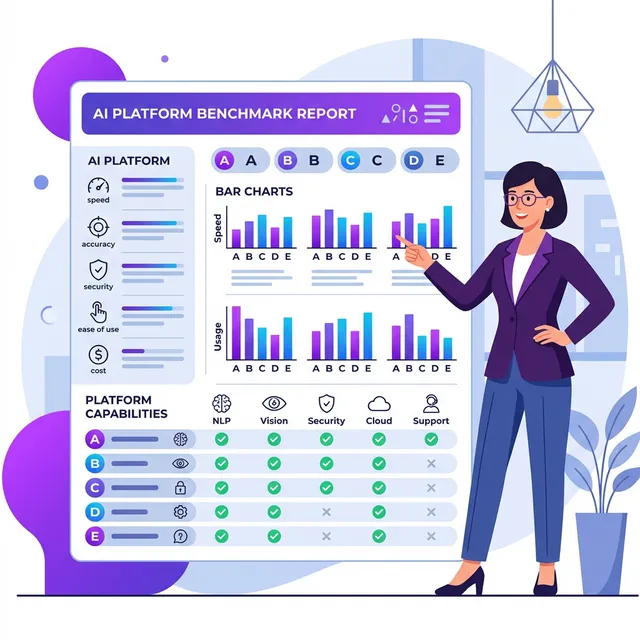
| Platform | Enterprise Score | Latency | Compliance | Integration Depth | Concurrent Scale | Best Use Case |
|---|
| Ringlyn AI | 9.4/10 | Sub-700ms | SOC2, HIPAA, GDPR | Native CRM + API | 10,000+ calls | Enterprise, regulated industries |
| Cognigy AI | 8.1/10 | Sub-900ms | SOC2, GDPR, ISO 27001 | Strong, EU-focused | 5,000+ calls | European enterprise, telco |
| Five9 | 7.9/10 | Sub-1,000ms | SOC2, HIPAA | Contact center native | High (CCaaS) | Contact center modernization |
| Retell AI | 7.8/10 | Sub-800ms | SOC2 (limited) | API-first | 2,000+ calls | Tech companies, developers |
| Talkdesk | 7.7/10 | Sub-900ms | SOC2, HIPAA | Contact center native | High (CCaaS) | Mid-enterprise CCaaS |
| Vapi | 7.5/10 | Variable | Limited | Full API control | Developer-managed | Custom voice AI products |
| Google Dialogflow CX | 7.3/10 | Sub-800ms | SOC2, HIPAA | GCP-native | Very high (GCP) | GCP enterprises, IVR |
| Synthflow | 7.2/10 | Sub-1,000ms | Basic | Mid-market connectors | 1,000–2,000 calls | Mid-market simple flows |
| Amazon Lex | 7.0/10 | Sub-900ms | SOC2, HIPAA | AWS-native | Very high (AWS) | AWS enterprises |
| Bland AI | 6.8/10 | Sub-1,200ms | Basic | Limited | 500–1,000 calls | SMB, early-stage pilots |
Scores based on structured evaluation against enterprise deployment criteria. February 2026.
See why enterprise procurement teams choose Ringlyn AI
Receive our full enterprise evaluation package including compliance documentation and reference customer contacts
Enterprise Procurement Decision Guide
Selecting a voice AI platform for enterprise deployment requires structured due diligence. Based on patterns across successful enterprise AI deployments, we recommend the following procurement process:
- Define your tier-1 requirements: Identify the three to five non-negotiable requirements (e.g., HIPAA compliance, Salesforce integration, sub-800ms latency) that will eliminate non-compliant vendors immediately.
- Issue a structured RFP: Include quantitative performance benchmarks, compliance documentation requests, security questionnaires, and reference customer requirements for comparable deployments.
- Run parallel proofs of concept: Shortlist two to three vendors and run simultaneous 30-day pilots on your actual use case with your real data. Do not evaluate on demo environments.
- Stress-test at projected scale: Require vendors to demonstrate performance at 2x your projected peak call volume. Platform degradation under load is a frequent post-deployment surprise.
- Evaluate total cost of ownership: Per-minute pricing is only one cost component. Factor in implementation, integration development, ongoing configuration management, and potential migration costs.
- Assess vendor trajectory: In a rapidly evolving market, vendor stability and investment in R&D matter. Review funding history, customer retention rates, and product roadmap commitments.