
Medicare and Insurance Voice AI: Verification and Enrollment
How voice AI handles eligibility verification and enrollment calls in the Medicare and health insurance space.
Utkarsh Mohan•Jun 18, 2026
How an AI receptionist works for an independent or captive insurance agency — the licensed line it must not cross, how it captures a rateable quote submission on the first call, what it does with a 2am claim call, how it handles COI and ID card requests, and how it compares with an insurance answering service.
Utkarsh Mohan
Published: Sep 21, 2026
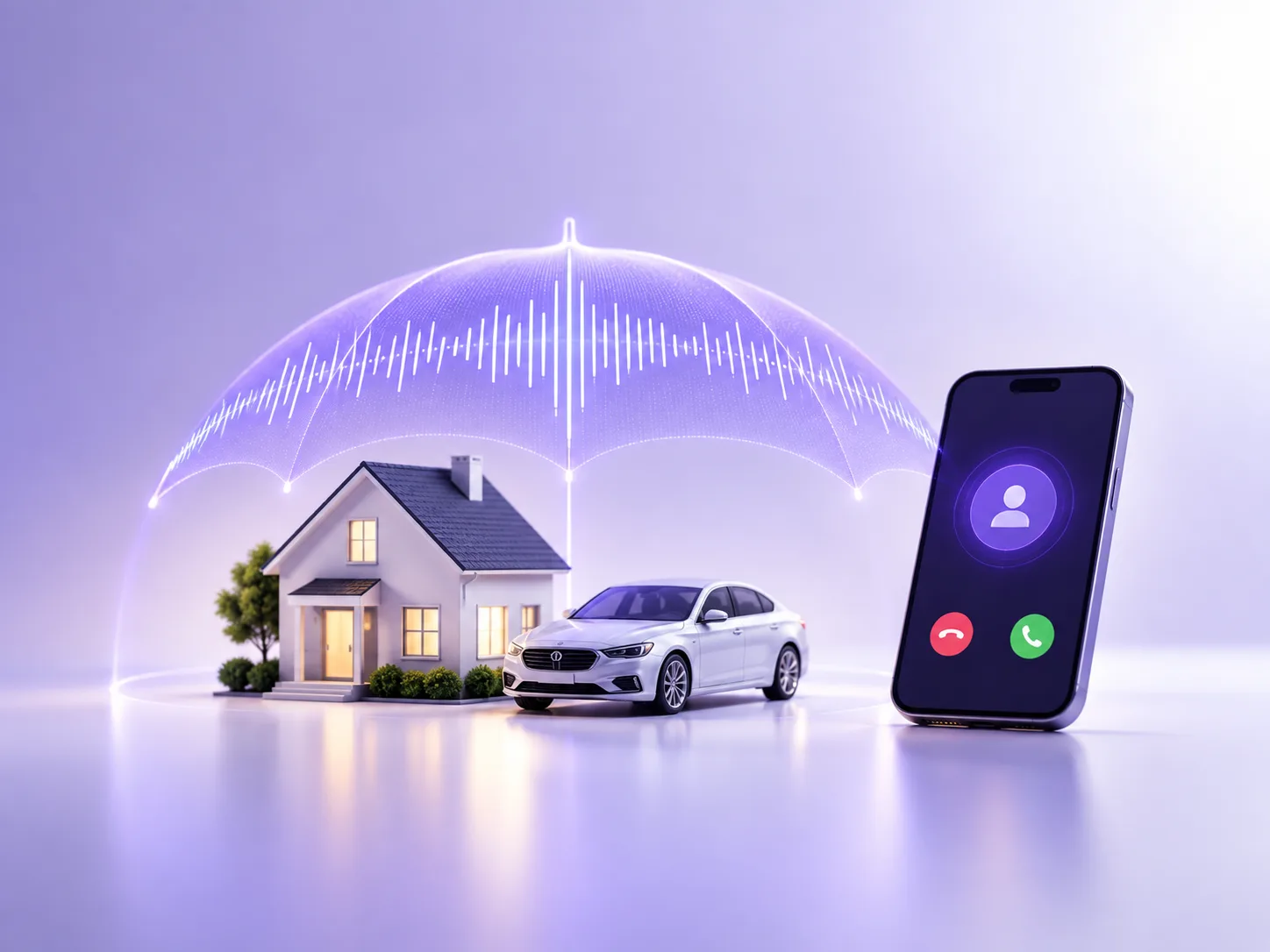
Ask the principal of any small insurance agency where the day goes and the answer is usually the same: the phone. Certificate requests from contractors who need one before they can start a job. A client who needs an ID card at the DMV counter right now. A billing question the carrier should have answered. And somewhere in that stream, the call that actually grows the agency — a new household wanting a quote — rings while every CSR is already on a line.
An AI receptionist for an insurance agency exists to take the routine calls off your licensed staff and to make sure the new-business call is always answered. It is not a replacement for an agent, and it cannot be: much of what happens on an insurance call legally requires a licence. This guide is built around that line — what the AI can do on its own, what it has to hand over, and how to set it up so your producers spend their time on the conversations only they can have. For the broader product, see the insurance use case; for Medicare-specific workflows, the Medicare verification and enrollment guide.
Insurance shopping is comparison shopping. A household unhappy with a renewal increase will call several agencies in an evening, and the agency that answers, takes the details, and promises a quote the next morning is in a far better position than the one whose voicemail greeting lists its office hours.
Meanwhile the agency's own staff are fully occupied with service work. In most personal-lines and small-commercial agencies, the majority of inbound calls are existing clients with routine requests. Those calls are necessary, they are not revenue, and they sit in the same queue as the prospect who is about to buy.
| When the call comes in | What usually happens today | What an AI receptionist changes |
|---|---|---|
| Evening, prospect comparing quotes | Voicemail; returned the next day, often too late | Answered, full quote details captured, producer follow-up booked |
| Monday morning service backlog | Hold queue; CSRs rushing through requests | COIs, ID cards, and payment questions handled without a CSR |
| Contractor needs a COI before 8am | Waits for the office to open | Request captured and queued, or issued where the workflow allows |
| Car accident on a Saturday night | Agency voicemail, client unsure what to do | Loss details captured, carrier claims line given, agent notified |
| Renewal increase notice arrives | Client calls, gets frustrated, shops elsewhere | Answered immediately, remarket review booked with a producer |
Where an insurance agency's phone coverage leaks business
In the US, soliciting, negotiating, and selling insurance requires a producer licence, and every state draws the boundary for unlicensed staff slightly differently. The safe design principle is simple: configure the AI to do only what an unlicensed customer service representative at your agency is allowed to do, and nothing more. Your compliance lead or E&O carrier should sign off on the script.
| Task | AI receptionist | Licensed agent |
|---|---|---|
| Collect information for a quote | Yes — name, address, drivers, vehicles, property details | Reviews and rates it |
| Explain coverage or recommend limits | No | Yes |
| Quote a premium | No, unless your state and carrier explicitly permit reading an agent-prepared quote | Yes |
| Bind coverage or make policy changes | No — takes the request only | Yes |
| Schedule an appointment with a producer | Yes | — |
| Answer office hours, payment options, carrier phone numbers | Yes | — |
| Take a claim report and give the carrier claims number | Yes | Follows up with the client |
| Tell a client whether a loss is covered | Never | Only the carrier decides; the agent advises |
“The most important sentence in the whole script is the one the agent says when a caller asks a coverage question: "That's a great question for one of our licensed agents — let me get you on their calendar, or put you through now."”
| Call type | Handled end to end? | What the AI does |
|---|---|---|
| New quote request | Intake only | Captures every rating field, books a producer callback or appointment |
| Certificate of insurance request | Intake, or end to end if your workflow allows | Captures holder name, address, and requirements; queues or triggers issuance |
| Auto ID card request | Yes, where cards are self-service | Sends the carrier app or portal link, or queues the request |
| Payment and billing question | Mostly | Gives payment options and the carrier billing number; routes disputes |
| Add a driver, vehicle, or change address | Intake only | Captures the change request; a licensed CSR processes it |
| Claim report | Intake plus routing | Captures the loss details, gives the carrier claims line, notifies the agent |
| Cancellation request | No | Routes to a person, who can often save the account |
| Coverage question | No | Books or transfers to a licensed agent |
Typical insurance agency call types, and where the AI hands over
The expensive part of a new-business quote is usually not the rating — it is chasing the prospect for the missing details afterwards. A properly configured insurance quote intake call collects everything the comparative rater needs in one pass, so the producer's first contact is a quote, not a questionnaire.
The agent closes the call by booking a specific time for a licensed producer to present the quote, and texts a confirmation. Where your process allows it, the prospect gets a secure link to upload their current declarations page, which answers half the questions at once.
Claims calls are the moments that decide whether a client stays with your agency for the next decade. They also tend to arrive at the worst time — a car accident on a Saturday night, a burst pipe at 3am. The carrier's claims line handles the claim itself, but many clients call their agent first because that is the number they know.
What the agent never does is tell the client whether the loss is covered. That decision belongs to the carrier, and a confident wrong answer at 3am is an E&O problem. The after-hours phone answering guide covers the general after-hours design.
Service is where an AI receptionist gives back the most staff time, because the requests are frequent, urgent to the client, and almost entirely structured.
Retention is where agency economics are won, and most agencies know which accounts are at risk long before they leave: the ones facing a large renewal increase, the monoline clients, the accounts nobody has spoken to in two years. Working those lists by phone is exactly the task that slips when the service queue is full.
| Campaign | What the AI does | Why it pays |
|---|---|---|
| Renewal review | Calls 45–60 days before renewal, confirms details are current, books a review with a producer | Catches changes and dissatisfaction before the client shops |
| Large-increase remarketing | Calls clients with a significant renewal increase, captures updated details, books a remarket conversation | The client hears from you before they hear from a competitor |
| Cross-sell for monoline clients | Asks whether they have other policies elsewhere and when those renew | Fills the pipeline with dated opportunities, not cold leads |
| Payment and lapse reminders | Reminds clients of an upcoming or missed payment where the agency handles billing | A lapse is a lost client and, sometimes, an uninsured loss |
| Quote follow-up | Calls prospects who received a quote but have not decided | Most unconverted quotes are never followed up at all |
Five outbound insurance agency campaigns worth automating
Outbound calling carries compliance obligations, covered below and in more detail in the TCPA compliance guide for AI voice agents.
AI for independent insurance agents and AI for captive agents do the same job, but the configuration differs in ways that matter.
| Dimension | AI receptionist | Insurance answering service | Additional CSR |
|---|---|---|---|
| Captures a complete quote submission | Yes, every field every time | Usually a name and number | Yes |
| Simultaneous calls | Unlimited | Depends on operator staffing | One at a time |
| Nights and weekends | Included | Included, often at a premium | Not covered |
| Outbound renewal and cross-sell calls | Runs automatically from your lists | Rarely offered | When the queue allows |
| Knows your carriers and procedures | Configured once, consistent | Generic across many clients | Yes, after training |
| Can process licensed tasks | No | No | Yes, if licensed |
| Cost model | Flat monthly plan | Per minute or per call | Salary, benefits, and licensing |
An insurance agency answering service solves the "someone answered" problem but not the "we have what we need to quote" problem, and it does nothing for retention. A new CSR solves both, one call at a time, during office hours. The AI receptionist covers the volume and the hours so that your licensed people — existing or new — spend their time on the calls that need a licence. The AI receptionist vs answering service comparison goes deeper on the general trade-off.
Set up an AI receptionist for your agency — quote intake, service requests, after-hours claims, and renewal outreach on one agent.
The value of the intake depends on where the data lands. If quote details arrive as an email a CSR has to retype into Applied Epic, EZLynx, HawkSoft, AMS360, or your comparative rater, you have moved the work rather than removed it.
Ringlyn's REST API and real-time webhooks deliver structured call data to any endpoint, which is how it connects to management systems without a native connector. Ask any vendor exactly which of those four capabilities work with your system, and whether that is a certified integration or a workaround. The integrations and call summaries pages show what the output looks like.
| Metric | Why it matters | Common mistake |
|---|---|---|
| Quote requests captured after hours | Sizes the new business you were missing | Assuming it was small because nobody was there to count it |
| Complete submissions on first call | Shows whether intake is actually rateable | Counting calls instead of usable submissions |
| Quote-to-bind rate | The number that matters for new business | Not measuring it before go-live |
| CSR hours spent on routine service | Where the time savings show up | Measuring call counts rather than time |
| Retention on remarketed renewals | The outcome of outbound campaigns | Crediting retention to the campaign without a comparison group |
| Escalation rate to licensed staff | Shows whether the boundary is set correctly | Treating a high rate as failure — early on it is correct behaviour |
Six numbers to track before and after deployment
An AI receptionist for an insurance agency is not a producer and must never act like one. What it does is answer every call, capture a rateable quote submission the first time, take claim reports at 3am and point clients to the carrier, clear COI, ID card, and billing requests from your CSRs' queue, and work the renewal and cross-sell lists nobody has time for. Draw the licensed line clearly, have the script reviewed, and measure complete submissions, quote-to-bind, and retention. Your licensed staff get their days back for the conversations that actually need them.
It is a voice agent that answers an insurance agency's phone, identifies whether the caller is a prospect or an existing client, captures quote details, handles routine service requests such as certificates of insurance, ID cards, and billing questions, takes after-hours claim reports, and routes anything requiring a licence to a licensed agent. It can also make outbound calls for renewal reviews, remarketing, and quote follow-up.
No. Soliciting, negotiating, and selling insurance requires a producer licence, so the AI should be configured to perform only the tasks an unlicensed customer service representative at your agency may perform: collecting information, scheduling appointments, answering administrative questions, and taking requests. Coverage questions, premium quotes, and binding go to a licensed agent. Have your compliance lead or E&O carrier review the script.
It tells the caller to contact emergency services first if anyone is hurt, identifies the client and policy, captures the loss details and any police report number, gives the carrier's claims line or online reporting link, reads your agency's mitigation reminders, and sends the agent a structured summary for the morning. It never tells the client whether a loss is covered, because only the carrier decides that.
For most agencies, yes. A traditional answering service typically takes a name and number and bills per minute or per call. An AI receptionist captures a complete quote submission, handles routine service requests, answers unlimited simultaneous calls, and runs outbound renewal and cross-sell campaigns. Neither can perform licensed tasks, so both hand those to your staff.
Yes. It captures the certificate holder's name and address, any additional-insured or waiver-of-subrogation requirements, and the job description, so your CSR only has to review and issue. Where your agency management system supports templated issuance for standard certificate holders, the issuance step can be automated as well.
Yes, with different configuration. Independent agencies need a carrier directory with claims lines, billing lines, and self-service links for each carrier, and broader quote intake because producers shop risks across markets. Captive agencies have simpler routing but should check their carrier agreement for rules on scripting, recording, and approved tools before deploying.
Ask any vendor specifically which capabilities work with your system. The ones that matter are structured quote and loss data rather than only a transcript, existing-client lookup by phone number, activities and notes logged against the client record, and scheduled lists for outbound campaigns. Ringlyn delivers structured call data through its REST API and real-time webhooks, which is how it connects to systems without a native connector.
It can be, if you follow the rules. Automated or artificial-voice calls to mobile numbers require prior express consent, and marketing calls require prior express written consent. You must honour do-not-call requests immediately, call within permitted local hours, disclose call recording where state law requires it, and protect nonpublic personal information under Gramm-Leach-Bliley and state privacy rules. Have counsel review any outbound programme before launch.
Ringlyn plans start at $49 a month on a flat monthly basis rather than per-minute billing. Multi-office agencies and clusters can use the agency licence to cover every location under one fee and their own brand, and agencies with strict data requirements can run the self-hosted licence on their own infrastructure.
They should. Disclose it at the start of the call along with any recording notice. It is increasingly expected and in some places required, and clients generally accept it when the assistant resolves their request quickly and hands them to a person the moment they ask.
How voice AI handles eligibility verification and enrollment calls in the Medicare and health insurance space.
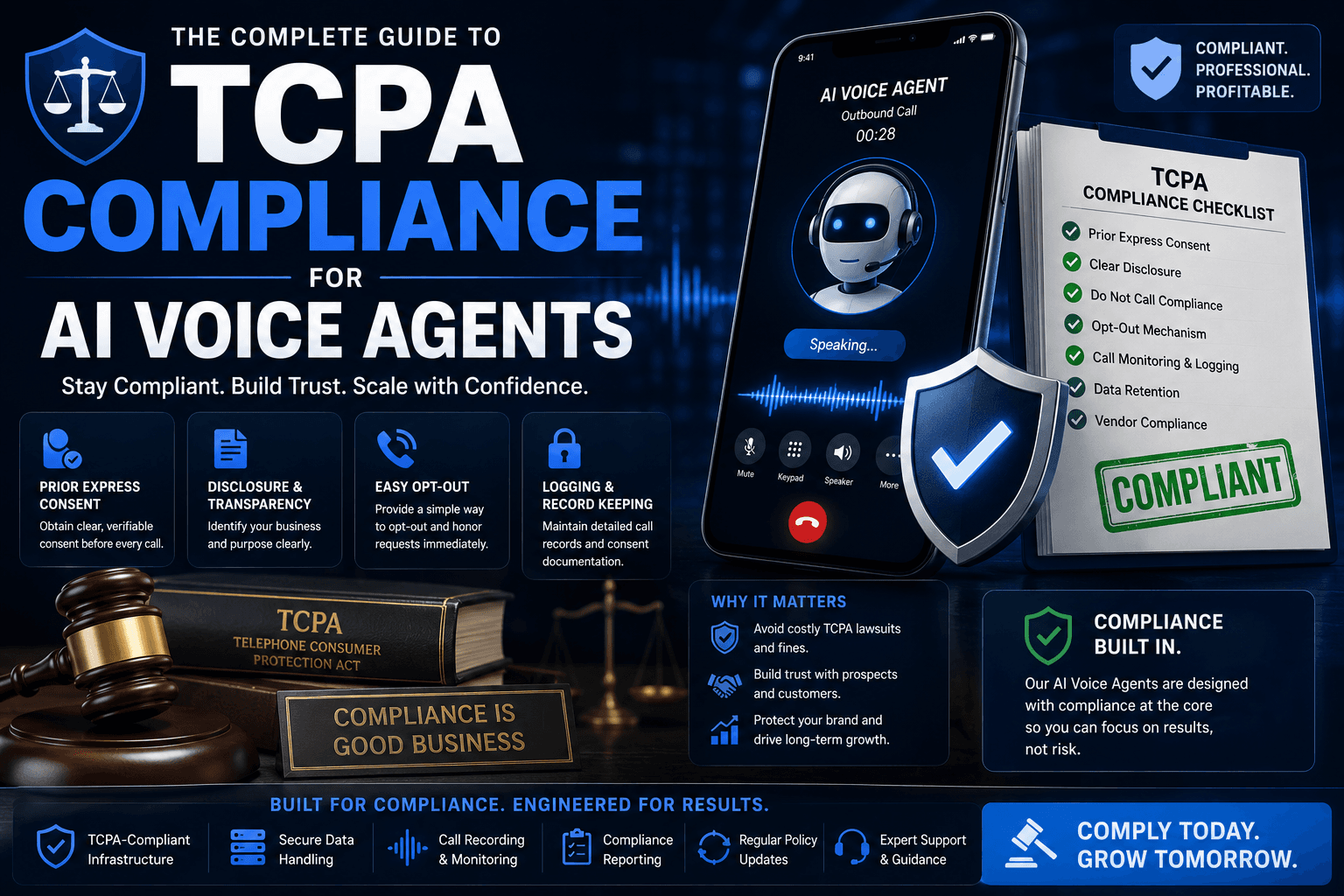
Consent, calling windows, do-not-call suppression, and disclosure rules for outbound AI calling programmes.

Why the hours your office is closed are where the highest-intent calls go unanswered, and how to cover them.