Voice AI for Car Dealerships: How It Works and Which Tools Fit
Inbound sales, service and parts, outbound lead response, routing, reporting, and how the platforms compare.
Utkarsh Mohan•Aug 17, 2026
Dealership BDCs miss 30%+ of calls and burn $90k+/year per rep. AI BDC software now handles inbound service calls, after-hours sales inquiries, and outbound lead follow-up 24/7 — at a fraction of the cost. Here's how it works, what to buy, and what it costs.
Divyesh Savaliya
Published: Apr 21, 2026
The traditional dealership BDC model is failing, and dealers know it. The average US car dealership misses 28 percent of all inbound calls, and during peak hours, that number climbs past 40 percent. Every unanswered call is a lost service appointment, a lost trade-in, or a lost new-vehicle sale — each worth between $400 and $3,200 in gross profit to the store. AI BDC software built on conversational voice AI is emerging as the solution that large dealer groups and single-rooftop independents alike are deploying to solve this problem at a fraction of the cost of maintaining a traditional BDC team.
In 2026, the distinction between an AI receptionist and a human BDC rep is narrowing to the point where most callers cannot tell the difference. Modern AI receptionist for car dealerships systems answer in under two seconds, maintain natural conversation across sales, service, and parts inquiries, integrate directly with your DMS and CRM, and hand off to a live agent with full context when a conversation requires it. They work 24 hours a day, seven days a week, including evenings, weekends, and holidays — the exact times when your BDC team is unavailable and competitors are winning deals.
This guide covers exactly what AI BDC software does, where it outperforms human reps and where it doesn't, what the leading platforms cost in 2026, and how a typical dealership can go from zero to fully deployed in 30 days.
AI BDC software is a voice-powered platform that replaces or supplements the human business development center at a car dealership. It answers inbound calls from a dealership's main number, service line, or direct marketing campaigns; qualifies the caller's intent; books appointments in the DMS; and transfers calls that require human judgment to the appropriate desk or department. On the outbound side, it calls unsold showroom traffic, internet leads, service customers due for maintenance, and recall campaign recipients — handling the routine follow-up that human BDC reps either don't have time for or consistently fail to execute.
What AI BDC software is not is a simple IVR tree or an auto-attendant that plays a menu and transfers calls. The difference is fundamental: traditional IVR systems recognize keypad inputs or a narrow set of spoken keywords. A modern voice dealer AI system understands natural language — 'I need to bring my Tahoe in for the weird noise it makes when I brake' triggers the correct service scheduling workflow without the caller needing to press 2 for service, then 1 for appointments, then listen to four more prompts. This natural language understanding is what eliminates caller frustration and dramatically reduces abandonment.
Dealer tools voice AI in 2026 typically layers three capabilities together: a speech-to-text engine that transcribes the call in real time, a large language model that understands intent and generates responses, and a text-to-speech engine that voices the reply in a natural-sounding voice. The orchestration layer connects these to your DMS (CDK, Reynolds, DealerSocket) to check appointment availability, pull customer history, and book slots — all within the conversational flow.
The dealership BDC model was designed for a world where lead volume was manageable and consumers expected a 24- to 48-hour response window. Neither of those conditions exists today. Automotive digital marketing now generates far more leads per rooftop than any BDC team can systematically follow up on. An average dealership receiving 300 internet leads per month needs 900 touchpoints in the first 72 hours to work each lead properly — calls, texts, and emails across a multi-day cadence. A three-rep BDC team handling inbound calls simultaneously cannot sustain that volume while maintaining consistent quality.
The cost problem compounds the capacity problem. A fully loaded BDC rep at a US dealership costs between $55,000 and $90,000 per year including salary, benefits, training, and management overhead. With an average BDC rep tenure of 14 months before turnover, dealers spend roughly $8,000 to $15,000 per rep hire-to-productive cycle — training time, onboarding, and performance ramp-up included. A car dealership answering service powered by AI eliminates this recurring cost entirely. The AI doesn't quit, doesn't call in sick on the first day of a major sales event, and doesn't need to be retrained when the manufacturer changes its lease incentive structure.
Consumer behavior has also shifted dramatically. Callers in 2026 expect immediate answers when they call a dealership, and they expect the person answering to have context about their vehicle, their service history, and their relationship with the store. When a service customer who last visited six months ago calls to book an oil change and hears 'What's your name and vehicle year/make/model?' for the third consecutive appointment, that customer starts looking for a different service provider. AI BDC software that integrates with your DMS can greet returning customers by name, reference their last visit, and book their preferred appointment time before a human rep would have even finished looking up the account.
When a prospect calls about a specific vehicle from a display ad, the AI receptionist for car dealerships handles the initial qualification: vehicle of interest, trade-in situation, financing needs, and preferred appointment time. It checks inventory in real time and books a showroom appointment directly into the CRM. If the prospect wants to negotiate price or trade value, the AI collects the information and schedules a callback with the appropriate sales manager rather than attempting a value conversation it isn't designed for.
Service is where most automotive answering service volume lives — oil changes, tire rotations, recall work, and warranty repairs generate the majority of daily call volume at most rooftops. The AI handles the entire booking workflow: pulling the customer record, confirming the vehicle, checking available appointment slots, booking the time, and sending a confirmation text or email. For complex repair descriptions, it creates a detailed write-up that goes directly to the service advisor's queue so they're ready when the customer arrives.
Studies show that 31 percent of automotive service scheduling calls happen outside business hours. Traditional dealerships route these calls to voicemail — and studies show that 85 percent of callers who reach voicemail do not leave a message; they call a competitor. After hours answering service auto dealers powered by voice AI capture these calls 100 percent of the time, booking appointments and routing urgent inquiries to an on-call manager when needed.
Here's how a typical inbound service call flows through an AI BDC software system versus a traditional three-rep human BDC team:
| Step | AI Voice Receptionist | 3-Rep Human BDC |
|---|---|---|
| Call answered | Under 2 seconds, 24/7, zero hold | Average 45-second hold during peak hours; goes to voicemail after-hours |
| Customer identification | Automatic DMS lookup by phone number — greets by name, references last visit | Manual lookup while caller waits; 30–60 seconds to pull up account |
| Reason for call captured | Natural language understanding — 'my brakes are grinding' → creates repair order description | Typed notes, accuracy depends on rep's attention and typing speed |
| Appointment availability | Real-time DMS query, offers 3 available slots, books immediately | Checks scheduling system manually, may need to put caller on hold |
| Confirmation sent | Automated SMS/email confirmation with appointment details within 30 seconds | Manual confirmation, often delayed or skipped during high-volume periods |
| Average handle time | 90–120 seconds | 4–7 minutes including hold and documentation |
| Concurrent capacity | Unlimited simultaneous calls | 1 call per rep; 3 reps = 3 simultaneous calls maximum |
| Annual cost | $6,000–$24,000/year depending on platform and call volume | $55,000–$90,000 per rep × 3 reps = $165,000–$270,000/year |
Book a 15-minute demo and watch the AI answer, qualify, and book a service appointment in real time — connected to a test DMS.
Outbound voice AI for car dealerships is where dealers who adopt early are gaining a significant competitive advantage. The typical dealership has thousands of dormant leads in its CRM — internet leads from the past 90 days that were called once or twice and then dropped, unsold showroom traffic from the past 30 days, and service customers whose vehicles are now due for maintenance. A human BDC team simply cannot maintain systematic contact with all of these leads while also handling inbound volume. An AI calling for car dealerships platform calls all of them.
Service departments are the revenue engine of most franchised dealerships, and they're also where phone mismanagement costs the most. Service advisors handling 15–20 active repair orders simultaneously are routinely unable to answer the phone when customers call for status updates, resulting in frustrated customers, negative CSI scores, and lost loyalty. Voice AI for dealership service departments handles three critical workflows that service advisors simply don't have time for:
An AI BDC software platform is only as good as its dealership system integrations. The major DMS and CRM platforms in automotive all have API layers, and the leading AI voice platforms have built certified or semi-certified integrations with the most common systems. Here's what to look for:
| System | Type | Integration Capability | Notes |
|---|---|---|---|
| CDK Global (CDK Drive) | DMS | Appointment booking, RO status queries, customer history lookup | Requires CDK OpenTrack API access; typical setup 5–10 days |
| Reynolds & Reynolds (ERA-IGNITE) | DMS | Appointment scheduling, customer record lookup, service history | Integration via Reynolds Partner Program certification |
| DealerSocket CRM | CRM | Lead logging, activity recording, appointment sync | Bidirectional sync; AI logs every call as a CRM activity |
| VinSolutions Connect CRM | CRM | Lead creation, follow-up task automation, appointment booking | One of the most common integrations; widely supported |
| Elead CRM | CRM | Lead management, call logging, appointment workflow | Also known as ELEAD1ONE; acquired by CDK Global |
| GoHighLevel | CRM | Full bidirectional API; lead management, calendar booking | Popular with independent dealers; easiest API to work with |
| DealerTrack | DMS/F&I | Customer lookup, finance lead routing | Cox Automotive ecosystem integration |
| Tekion | DMS | Modern REST API; appointment booking, RO management | Newer DMS with strong API access; fastest to integrate |
DMS and CRM integration capabilities for AI BDC software platforms at car dealerships (2026)
Dealerships evaluating AI BDC software in 2026 encounter three primary pricing models, each with different economics depending on call volume and use case mix:
| Pricing Model | Typical Cost | Best For | Watch Out For |
|---|---|---|---|
| Per-minute usage | $0.07–$0.35/minute of AI call time | Dealerships with highly variable monthly call volume | Bill spikes during promotional events; per-minute stacks with telephony costs |
| Per-seat / per-agent | $100–$400/month per AI 'agent' deployed | Stores wanting predictable monthly costs with defined agent capacity | Some platforms cap concurrent calls per seat; can hit limits unexpectedly |
| Flat monthly rate | $299–$2,499/month for unlimited calls within tier | Established dealers with consistent volume needing budget predictability | Entry tiers often limit outbound call volume or concurrent inbound lines |
AI BDC software pricing models for car dealerships in 2026
Ringlyn AI offers dealership-optimized plans starting at $49/month (Starter), $99/month (Growth), and $199/month (Professional) with the WhiteLabel plan at $2,497/month for dealer groups that want to deploy AI across multiple rooftops under a unified brand. Unlike per-minute platforms, Ringlyn's flat-rate structure means a dealer running a major sales event with 500 calls in a single day pays the same rate as a slow month — eliminating the bill shock that dealers on usage-based plans report.
Enter your current monthly call volume and missed call rate — see exactly how much revenue you're leaving on the table and what AI BDC software would cost to fix it.
Dealers who have successfully deployed AI BDC software consistently report that the technical setup takes less than a week — the harder work is change management with the sales and service teams. Here's the 30-day rollout sequence that minimizes friction:
“We had a three-rep BDC that was answering maybe 65 percent of calls during business hours and zero after hours. Within 60 days of going live with the AI, we were answering 98 percent of all calls. Service bookings went up 23 percent in the first month because we were finally capturing the calls that used to go to voicemail at 7 p.m. The ROI math was not complicated.”
— General Manager, franchise dealer group, Midwest (customer of Ringlyn AI)
Modern AI voice agents handle frustrated or upset customers significantly better than most BDC reps because they never escalate emotionally in return. The AI maintains a calm, empathetic tone regardless of how the caller is behaving, which tends to de-escalate the conversation faster than a human who may mirror the caller's frustration. For highly complex or emotionally charged situations — a dispute over a warranty repair, an accusation of overcharging — the AI is configured to recognize distress signals and offer a warm transfer to a service manager immediately. Most dealers set a threshold so that any caller who uses explicit language or raises their voice gets transferred to a live person within 30 seconds.
For dealer groups with mobile service vans or multi-location operations, the AI captures the caller's ZIP code during the call and runs it against a configured geographic routing table — typically loaded as a simple spreadsheet mapping ZIP codes to locations or technicians. The AI then either tells the caller which location serves their area, books the appointment at the correct store, or triggers a webhook that creates a dispatch ticket in the mobile service management platform. This workflow takes about 30 minutes to configure once the routing table is set up.
A 3-rep BDC team costs $165,000 to $270,000 per year including salary, benefits, and management overhead. AI BDC software for a comparable-volume dealership costs $3,600 to $30,000 per year depending on platform and plan tier. That's an 85–95% reduction in direct labor cost. Add the revenue captured from calls that previously went unanswered — at $400 to $3,200 per lost service or sales call — and most dealerships recoup their AI investment within the first month. The calculation that most dealers do: take your average monthly missed call count, multiply by your average RO value ($280–$400 for service), and compare to your monthly AI subscription cost.
Yes — all major AI BDC software platforms support integrations with CDK Global, Reynolds & Reynolds, DealerSocket, VinSolutions, Elead, DealerTrack, and Tekion. The depth of integration varies: some platforms offer read/write access to appointment books and repair orders; others are read-only and create tasks for a human to act on. When evaluating platforms, ask specifically whether the AI can write appointments back into your DMS without human intervention — this determines whether it fully automates the booking workflow or just qualifies and hands off.
Yes, and it's one of the stronger arguments for AI in automotive markets with large Spanish-speaking customer bases. AI voice agents detect the caller's language in the first few seconds and switch to a fully fluent conversation in Spanish, Mandarin, Vietnamese, or other configured languages — without any routing delay or 'please hold for a Spanish-speaking agent' interruption. Dealers in markets like Miami, Los Angeles, Houston, and Phoenix report that AI handling of Spanish-language inbound calls captures significant previously-lost service and sales volume from callers who simply hung up when reached by an English-only BDC rep.
Inbound sales, service and parts, outbound lead response, routing, reporting, and how the platforms compare.
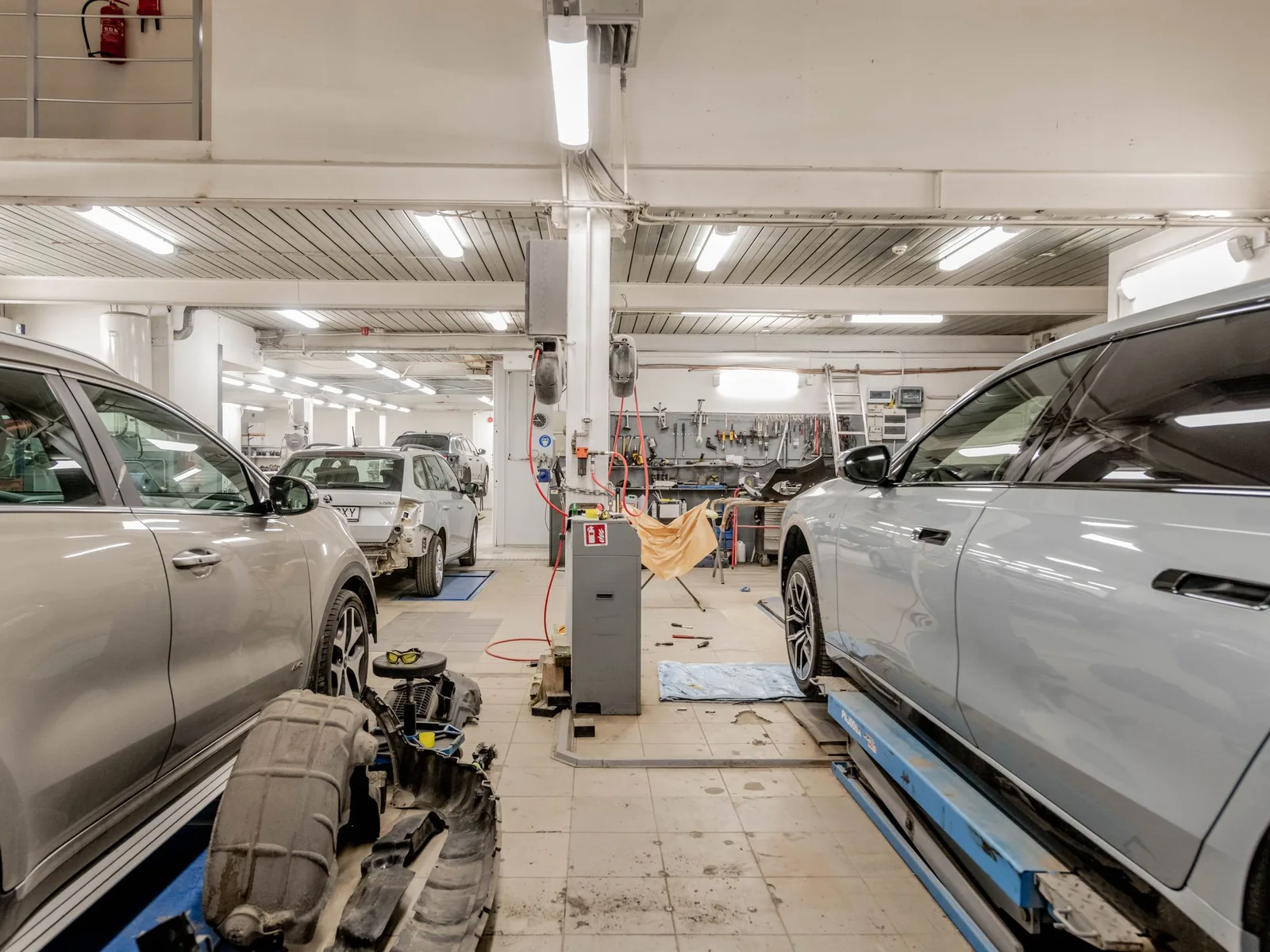
The fixed-ops side: service advisors, independent shops, and the equipment-dealer configuration.