
Voice AI for Car Dealerships: How It Works and Which Tools Fit
The full dealership picture — inbound sales, service and parts, outbound lead response, routing, and how the platforms compare.
Utkarsh Mohan•Aug 17, 2026
The fixed-ops half of automotive voice AI: how an AI answering service handles the service drive, what it frees up for auto repair shops running two advisors, and why heavy equipment and agricultural dealers have a harder answering problem than car stores do.
Utkarsh Mohan
Published: Aug 17, 2026
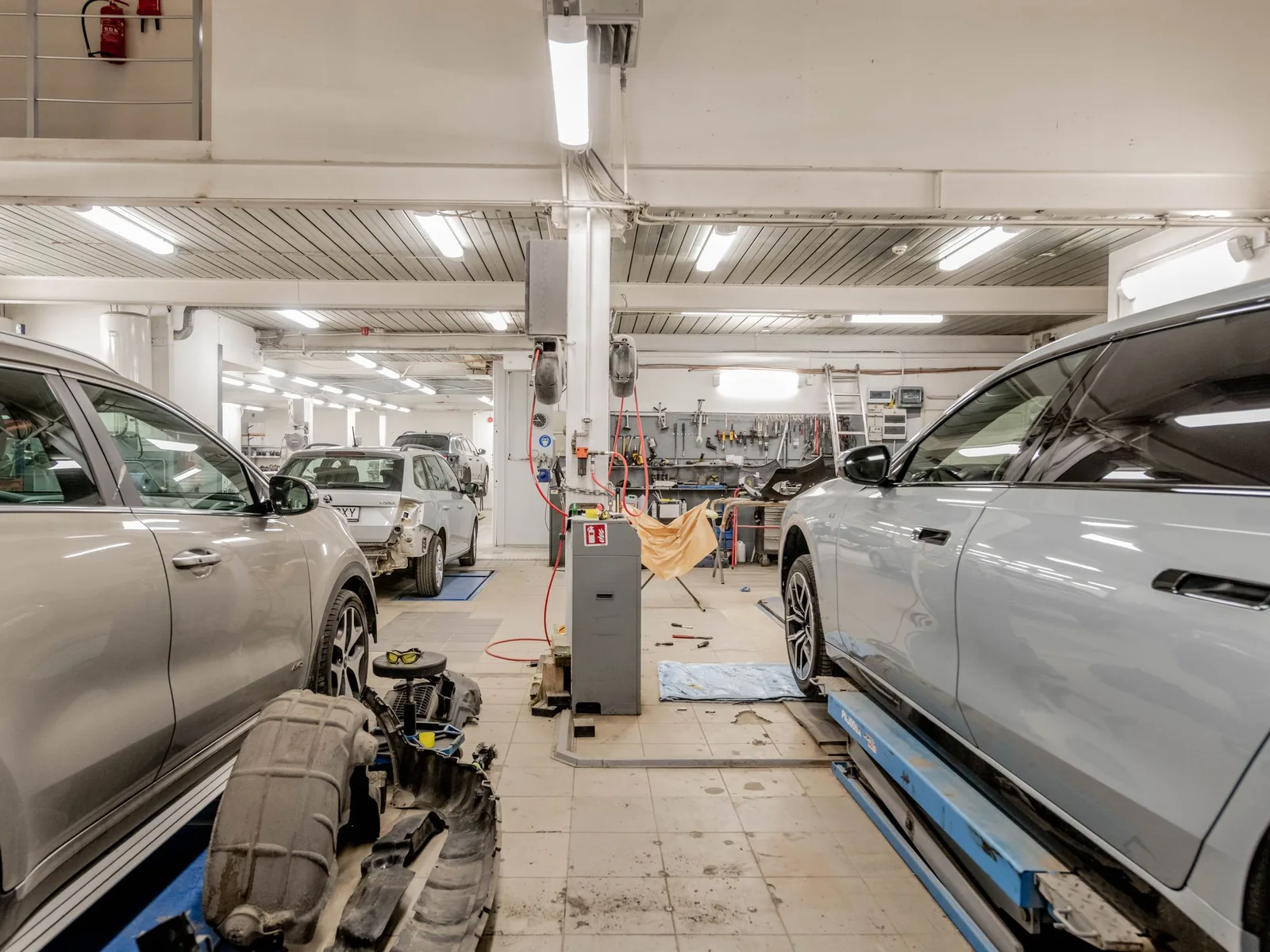
Most writing about voice AI in automotive is about selling cars. That is the smaller half of the phone problem. The service drive generates more calls, more repeat customers, and in a lot of stores more gross — and it is answered by people whose actual job is standing at a terminal writing repair orders with a customer in front of them.
This guide covers the fixed-ops side: what an AI answering service for auto repair shops and dealerships takes off the service phone, how it behaves in a two-bay independent versus a franchise store, and why equipment dealers — construction, agricultural, and outdoor power — have a version of this problem that is genuinely harder to solve.
Sales calls are inquiries from strangers. Service calls are mostly from people you already have a relationship with, calling about a specific vehicle, often with a specific open ticket. That changes what a good answer looks like.
| Sales phone | Service phone | |
|---|---|---|
| Who is calling | Mostly strangers, low context | Mostly existing customers, high context |
| Peak time | Weekend midday, weekday evening | 7:00–9:30am, and 4:30–6:00pm at pickup |
| Typical ask | Is it available, what is the price | Is my car ready, can I book, how much will it be |
| Cost of a missed call | A lost lead you paid for | A lost RO and a customer who books at the independent down the road |
| Who answers today | BDC or a salesperson between customers | An advisor mid-write-up, or nobody |
| Data needed to answer | Inventory feed | DMS, open RO status, technician availability, parts stock |
Why the service phone needs a different answering configuration to the sales phone
The last row is the important one. A sales agent needs one integration to be useful. A service agent needs three or four, and a service agent without them is a glorified voicemail that says "someone will call you back."
Break the service phone down by call type and the automation case becomes obvious for some and obviously wrong for others.
| Call type | Share of volume (typical) | Automate? | Why |
|---|---|---|---|
| "Is my car ready?" | High | Yes | Pure lookup against the open RO; instant answer, zero judgment |
| Booking a service appointment | High | Yes | Structured: VIN or plate, concern, op code, calendar slot |
| Rescheduling and cancellations | Medium | Yes | Frees a slot that otherwise goes unused |
| Hours, location, loaner policy, shuttle | Medium | Yes | Static answers currently interrupting a live advisor |
| Recall applicability by VIN | Medium | Yes | Lookup with a binary answer and a booking outcome |
| Parts availability and price | Medium | Partly | Fine for stocked items; superseded numbers and fitment go to a person |
| Approving additional work | Medium | No | Money conversation; also where fixed-ops gross gets sold |
| Describing a new noise or warning light | Medium | No | Diagnostic judgment, and the opening for upsell |
| Comeback on a completed repair | Low | Never | The most sensitive call type in the building |
Service-lane call types ranked by automation suitability
The four rows marked yes usually account for well over half the inbound volume. That is the prize: not replacing advisors, but removing the interruptions that stop them writing.
An independent shop running two advisors and six bays has the same problem as a franchise store with none of the infrastructure. There is no BDC, no overflow team, and frequently no receptionist. The phone is answered by whoever is nearest, which means it is answered inconsistently and often not at all.
The economics are also different. A franchise store weighs voice AI against BDC headcount. An independent weighs it against the calls it is currently losing, and that comparison is usually more favourable — because the baseline is not a slow answer, it is no answer.
For shops under about eight bays, the honest framing is that voice AI is not a labour-saving purchase — it is a revenue-recovery one. You are not removing a role you have; you are capturing bookings you were never in a position to take.
Advisors are the most expensive people in fixed ops to interrupt, because their output is measured in hours sold and every phone call pauses a write-up. Any credible AI-driven call handling system for automotive service advisors should be judged on one question: does it reduce the number of times the phone pulls an advisor away from the drive?
Three configurations do that, and they are worth deploying in this order.
“An advisor who is interrupted every four minutes cannot sell additional work. The point of automating the service phone is not that the AI writes better ROs. It is that the advisor gets an uninterrupted twenty minutes with the customer in front of them.”
Construction, agricultural, and outdoor power equipment dealers get lumped in with car dealers and should not be. The call profile is different in four ways, and vendors built for automotive routinely underperform here.
The practical configuration for an AI answering service for equipment dealers looks different as a result: a hard, fast escalation path for anything described as down or not running, mandatory read-back of any serial or part number, capture of site address and access details on every field-service request, and a rental-availability question in the qualification flow because a customer with a machine down often needs a substitute before they need a repair.
What automates cleanly is the same as anywhere: hours, location, stocked-parts availability, scheduled maintenance booking, warranty registration questions, and status updates on an open work order. What must not be automated is a downtime call that needs a technician dispatched today.
Most shops and dealers evaluating this already use, or have used, a traditional answering service. The distinction that matters is not human versus machine — it is whether the call ends in a booking or in a message.
| Dimension | AI answering service | Traditional answering service |
|---|---|---|
| Outcome of a booking call | Appointment written to the scheduler on the call | Message taken; you call back tomorrow |
| "Is my car ready?" | Answered from the open RO instantly | Cannot answer; takes a message |
| Simultaneous calls | Unlimited | Limited by staffed operators; peaks queue |
| Pricing model | Flat monthly, independent of volume | Per minute or per call; peaks cost most |
| Product knowledge | Reads your live DMS, parts, and calendar data | Generic script, no system access |
| Availability | 24/7/365 at the same cost | After-hours often a premium tier |
| Record of the call | Full transcript, summary, and structured fields | A typed message of variable quality |
The gap is widest exactly where the money is. An answering service cannot tell a caller their vehicle is ready, cannot book against a real service calendar, and cannot check whether a part is on the shelf — because it has no access to any of those systems. It converts a hold into a callback, which is not the same as solving the call.
Costs vary by market, but the shape of the comparison is consistent. The figures below are typical 2026 ranges for a single location, not quotes.
| Option | Typical monthly cost | Simultaneous calls | Books appointments? |
|---|---|---|---|
| Additional service BDC or receptionist | $3,500 – $5,500 fully loaded | 1 | Yes |
| Traditional answering service | $300 – $1,200, volume-dependent | Queued | Rarely — messages only |
| Legacy auto-attendant / IVR | $50 – $200 | Unlimited | No |
| Voicemail | Effectively $0 | Unlimited | No |
| AI answering service | $200 – $800 flat | Unlimited | Yes |
Service-phone coverage options for a single automotive location, 2026
The per-minute versus flat-rate distinction matters more than the headline number. A per-minute answering service is cheapest in the month when you needed it least and most expensive during the seasonal spike when call volume triples — which is the inverse of how you want a utility to price. Ringlyn prices flat, so a harvest-season or first-freeze surge costs the same as a quiet February.
A service agent with no system access is a message-taker. Ask about these five specifically, and ask whether each is read-only or read-write, because the difference determines whether the call ends in a booking.
Ringlyn answers status calls, books service, and checks parts availability so the drive stops competing with the phone.
Deployments fail from over-scoping, not from technology. This sequence keeps the blast radius small and gives you a real baseline to judge against.
Four numbers, measured before and after. Everything else is noise.
| Metric | What good looks like | Common mistake |
|---|---|---|
| Missed and abandoned calls | Near zero, including 7–9am | Measuring answered calls instead, which hides abandons |
| Appointments booked outside business hours | A number that was previously zero | Not separating it from total bookings, so the gain disappears |
| Advisor phone interruptions per hour | Materially down within two weeks | Not baselining it, so the change is unmeasurable |
| Service no-show rate | Down, if you added confirmation calls | Attributing the whole change to AI when a reminder cadence did the work |
The four fixed-ops metrics that reveal whether the deployment worked
If missed calls fall and after-hours bookings appear where there were none, the deployment is doing its job. If advisors report fewer interruptions and the drive moves faster in the morning, it is doing the more valuable half of its job — the half that does not show up on the phone report at all.
It is a voice agent that answers your service phone, resolves the call itself where it can, and transfers where it cannot. It looks up open repair-order status, books and reschedules service appointments against your real calendar, checks stocked parts availability, answers hours, loaner, and shuttle questions, confirms recall applicability by VIN, and logs everything back to your DMS or shop management system. Unlike a traditional answering service, it ends calls in bookings rather than messages.
A traditional service has no access to your systems, so it takes a message and you call back. It cannot tell a customer their vehicle is ready, cannot book against a real service calendar, and cannot check whether a part is on the shelf. It also queues at peak and typically bills per minute or per call, meaning your busiest month is your most expensive. An AI answering service handles unlimited simultaneous calls at a flat rate and completes the transaction on the call.
That is one of the strongest cases. An independent has no BDC and no overflow team, so the baseline is not a slow answer — it is no answer, especially during the 7:00–8:30am drop-off, at lunch, and after hours. For shops under about eight bays the honest framing is revenue recovery rather than labour saving: you are capturing bookings you were never in a position to take, not removing a role you already have.
Judge them on one question: does it reduce how often the phone pulls an advisor off the drive. The three configurations that do are front-line answering with escalation, callback batching (the agent captures the concern and books a five-minute callback slot so the advisor makes six calls in one block instead of being interrupted six times), and proactive outbound status updates when an RO state changes. The third suppresses inbound status calls before they happen and is the one most stores skip.
Yes, but it needs a different configuration to an automotive one. Construction, agricultural, and outdoor power dealers deal with downtime calls that are urgent by the hour, serial and part numbers that must be read back and confirmed digit by digit, field-service dispatch rather than calendar booking, and extreme seasonality during planting, harvest, or the first hard freeze. Configure a fast escalation path for anything described as down, mandatory read-back on serials, site-access capture on field requests, and a rental-availability question in the qualification flow.
Approving additional work, any comeback on a completed repair, a customer describing a new noise or warning light, equipment reported as down, anyone who has already escalated once, and any call where recognition has failed twice. Set these as hard routing rules on day one. Deployments fail from over-scoping far more often than from technical problems.
Typical 2026 ranges for one location are $200–$800 per month flat for an AI answering service, against $300–$1,200 volume-dependent for a traditional answering service and $3,500–$5,500 fully loaded for an additional service BDC or receptionist. The flat versus per-minute distinction matters more than the headline: per-minute pricing is cheapest in the month you needed it least and most expensive during the seasonal spike, which is the inverse of how you want a utility to price.
Five, and ask whether each is read-only or read-write: DMS or shop management system for RO status and appointment creation, the service scheduler for real capacity and op-code duration, parts inventory for stocked availability and price, SMS for confirmations and reminders, and VIN-based recall lookup. Read-only access means the agent can answer questions but cannot book, which halves the value.
Two weeks is a realistic sequence: measure your baseline on days 1–2, run after-hours only on days 3–4, listen to every recorded call and tune the script on days 5–7, add daytime overflow on days 8–10, enable booking and status write-back on days 11–12, and turn on proactive outbound status calls on days 13–14. Nothing customer-facing during business hours changes until you have heard the agent handle a week of real calls.
Four numbers, baselined before you start: missed and abandoned calls including the 7–9am window, appointments booked outside business hours (previously zero), advisor phone interruptions per hour, and the service no-show rate. If missed calls fall and after-hours bookings appear, it is working. If advisors report fewer interruptions and the morning drive moves faster, it is doing the more valuable half of the job — the half that never shows on the phone report.
The full dealership picture — inbound sales, service and parts, outbound lead response, routing, and how the platforms compare.
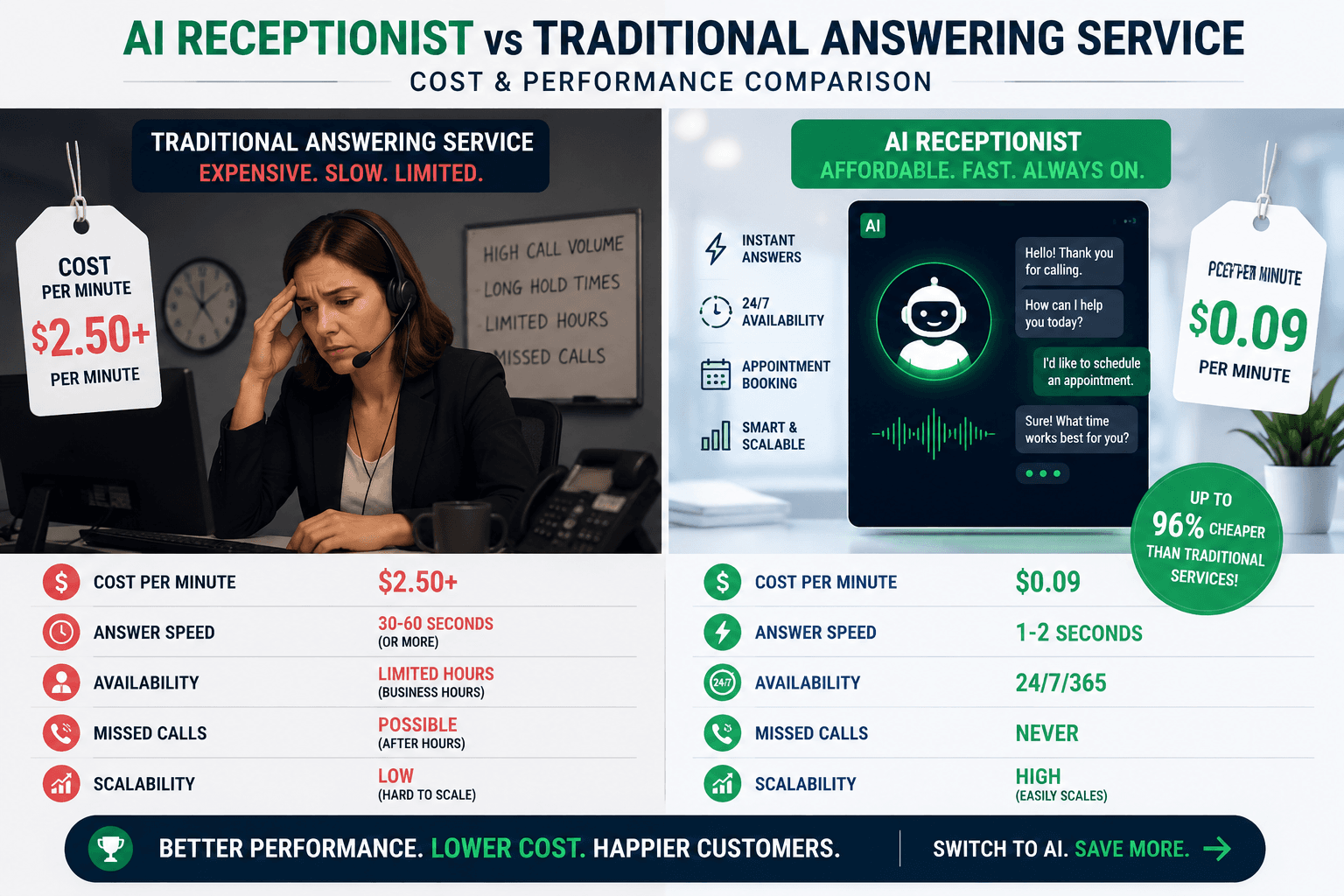
Where the two models differ on cost, capability, and what actually happens at the end of the call.

How reminder cadences cut no-shows across healthcare, home services, and automotive repair.